If you have been feeling pain on the inside of your elbow, especially when gripping, lifting, or even typing, you are not alone. It often starts mild but gets harder to ignore. Holding a coffee cup, opening a jar, or working out can start to feel uncomfortable. The frustrating part: it does not just happen to golfers.
What causes golfer’s elbow?
Golfer’s elbow, properly called medial epicondylitis, is irritation or small tearing of the flexor and pronator tendons where they attach to the bony bump on the inside of the elbow. Pain is usually sharpest with gripping, wrist flexion, or carrying heavier loads, and tends to build over weeks rather than appearing overnight.
The condition is now better described as a tendinopathy than a true inflammation, because biopsy studies have repeatedly shown disorganised collagen rather than active inflammatory cells. It builds up from repetitive use (typing, lifting, gym work, certain trades), grip-heavy activity, muscle imbalance through the forearm, and overuse without enough recovery. Even when it feels like it came out of nowhere, it is almost always something that has been brewing for a while.
What actually helps golfer’s elbow?
The most effective approach is to load the tendon progressively while reducing the aggravating activity, not to rest completely. A combination tends to give the best results:
- Shockwave therapy to stimulate healing in the irritated tendon, particularly for cases that have not responded to six to twelve weeks of activity modification
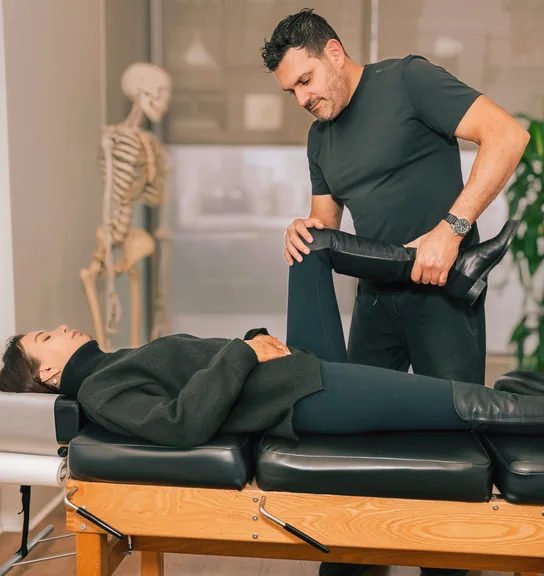
- Chiropractic care to improve joint mechanics at the elbow, wrist, and shoulder so the load is shared properly
- Physiotherapy to load the flexor tendon under graded resistance, the single best-evidenced intervention for tendinopathy
- IMS (intramuscular stimulation) to release related muscle tension in the forearm
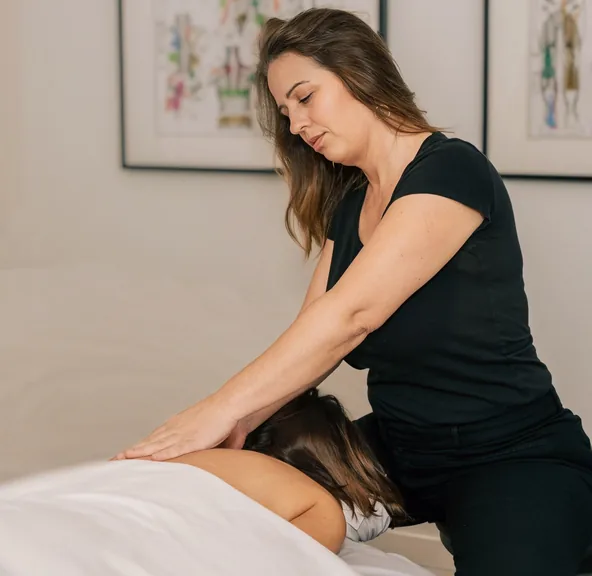
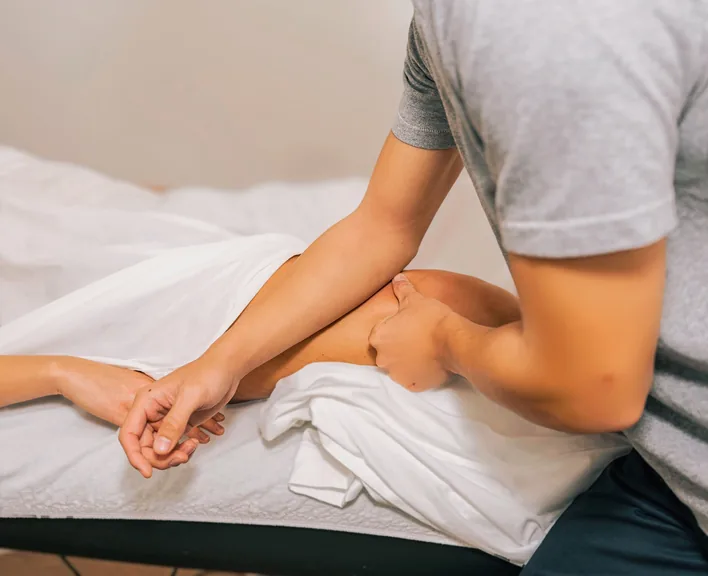
- Massage therapy to ease pain and improve circulation through the forearm
- Acupuncture for pain relief and to support local healing
Small changes to how you grip, lift, or use your arm also make a real difference. Complete rest is the most common mistake. It eases the symptom for a few days, but the tendon does not adapt to load it never sees, so the pain returns the moment you go back to whatever set it off.
How long until golfer’s elbow feels better?
Recovery depends on how long the problem has been there. Most patients notice less irritation within two to three weeks of starting a structured loading programme, with improved strength and tolerance over six to twelve weeks. Tendons are slow tissue, but they do remodel and adapt when loaded correctly. Cases that have been around for six months or longer often need shockwave plus loading, and may take three to four months to fully settle.
When should you see a professional for elbow pain?
If you are dealing with elbow pain that has lasted more than two to three weeks, pain when gripping or lifting, or symptoms that are not improving on their own, get it assessed. Treating the cause rather than just managing the pain saves months of stop-start recovery. Sudden, severe pain after a fall, swelling, or any inability to straighten the arm fully needs urgent assessment to rule out a fracture or other diagnosis.
Where to start in Vancouver
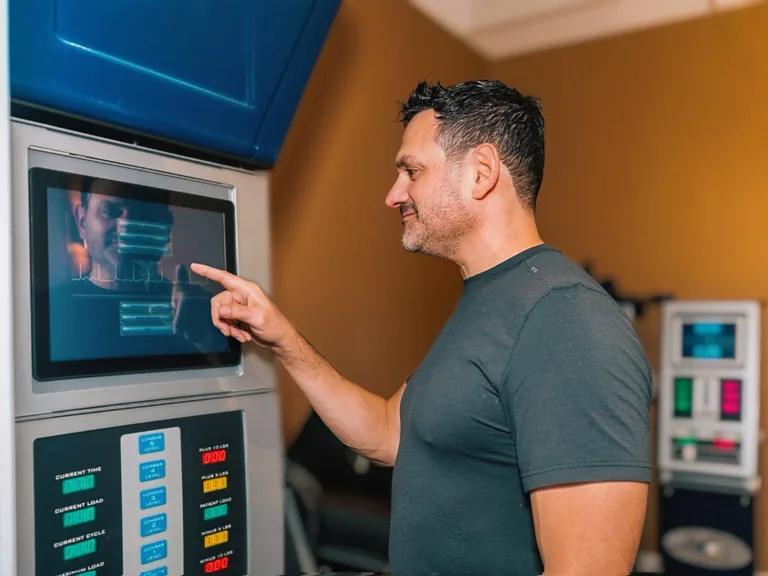
We can help you work out what is actually driving your elbow pain and put together a plan that fits your body and your daily activities. Life Integrative is on Dunbar Street in Vancouver, serving Kerrisdale, Point Grey, Kitsilano, and Arbutus Ridge. We have shockwave therapy on site and a multidisciplinary team under one roof. Care is led by Dr Daniel Zybutz, DC, the clinic director, with over twenty years of clinical experience.
Book online or call us on (604) 742-0702.
Related reading
- Plantar Fasciitis Treatment in Vancouver — another tendon-overload problem that responds to shockwave
- Joint Pain That Keeps Getting Worse: What’s Behind It — how compensation patterns spread an isolated problem
Sources
- British Journal of Sports Medicine consensus statements on tendinopathy management.
- Cochrane Library reviews on extracorporeal shockwave therapy for upper-limb tendinopathies.
- HealthLink BC, elbow pain and tendon injury topics, healthlinkbc.ca.
Transcript
Does your elbow ache when you try to squeeze things or open and close door handles? You might have golfer’s elbow, also known as medial epicondylitis, which is a condition where you have torn part of the tendon that helps flex or bring your wrist forward. Luckily, we have a machine here called shockwave therapy, which is an excellent device to get you back out on the golf course.