If you have been noticing more stiffness, aching, or discomfort in your joints lately, you are not alone. Maybe it started as something mild, but now it is more frequent, lasts longer, or is affecting your daily life. When joint pain keeps getting worse, it is usually your body telling you something needs attention.
What causes joint pain that keeps getting worse?
Progressive joint pain almost never has a single cause. It builds from a combination of accumulated wear, old injuries that never fully healed, poor movement patterns or posture, and muscle imbalances that shift extra load onto the joint. Often the pain shows up in one place, but the root cause is somewhere else.
When one joint stops moving well, the joints above and below start working harder to compensate. The cascade spreads the problem before you realise what has happened. A stiff ankle pushes the knee inward, the knee changes how the hip loads, the hip shifts the pelvis, the lower back picks up the slack. By the time the back hurts, the original ankle is rarely the part you suspect, which is why a whole-chain assessment matters.
What actually helps joint pain?
The most effective approach addresses how the joint moves, not just how it feels. A combination usually works better than a single treatment:
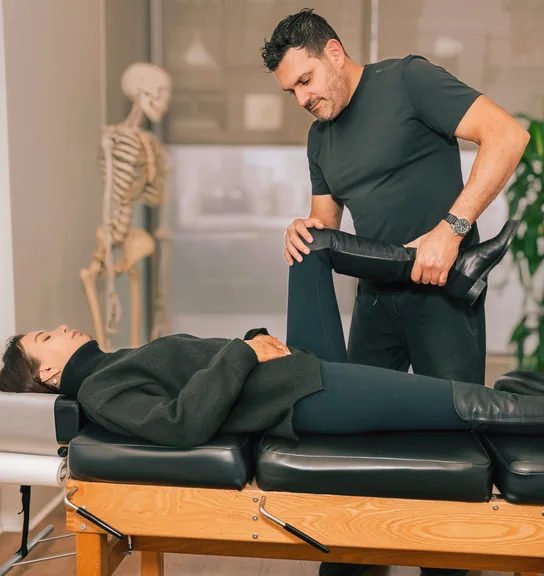
- Chiropractic care to improve joint mobility and reduce stiffness in the affected joint and the chain above and below
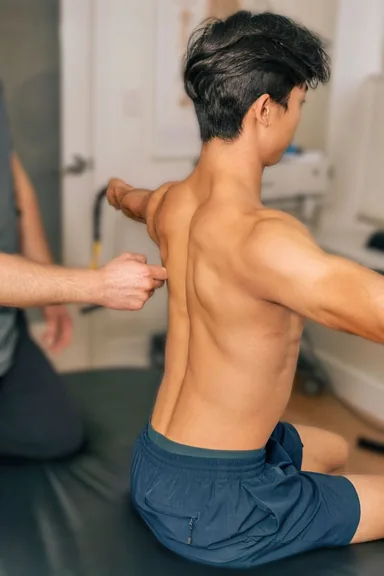
- Physiotherapy to strengthen the muscles that support your joints; clinical guidelines from the American College of Rheumatology consistently rank exercise therapy as the strongest non-pharmacological treatment for osteoarthritic joint pain
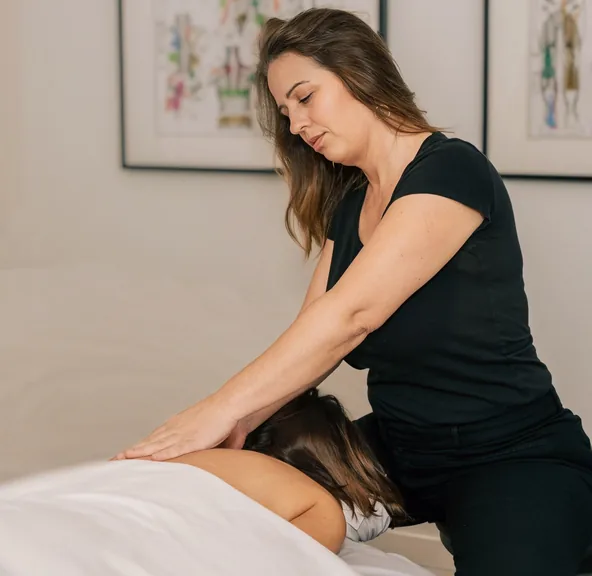
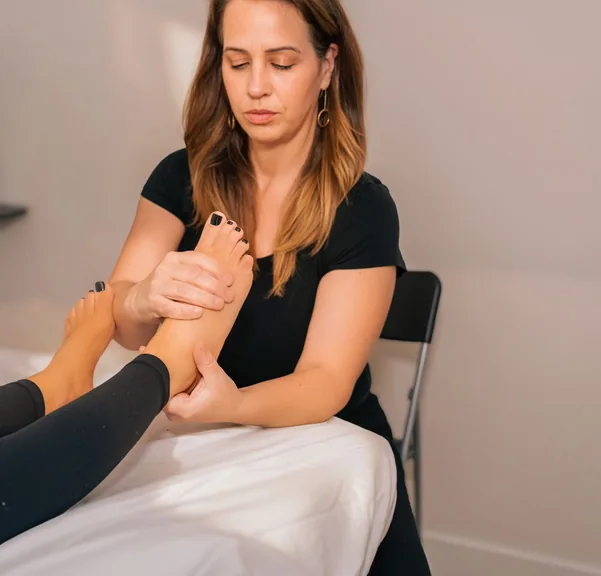
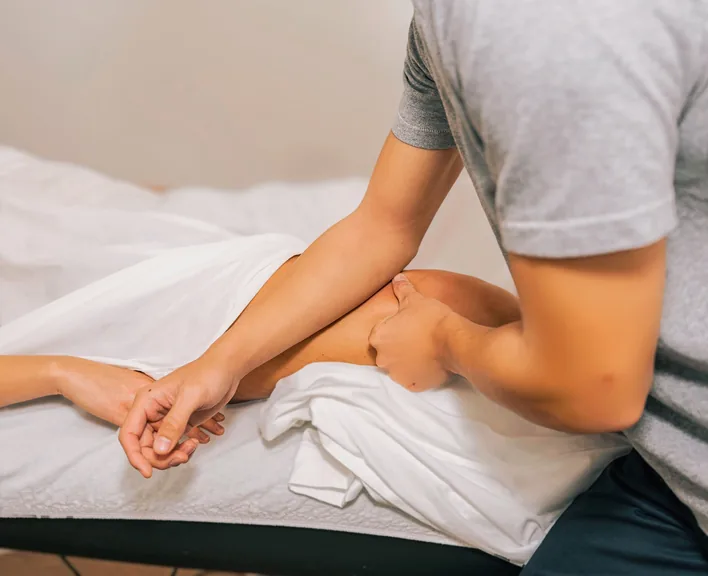
- Massage therapy to release surrounding muscle tension that compounds the problem
- Acupuncture to help reduce pain and inflammation
Movement is part of the answer too. Rest can calm an irritated joint, but too much rest tends to make things stiffer and weaker. Gentle, guided movement keeps the joint mobile and supported without overloading it.
How long until joint pain improves?
It depends on what is driving it, but most patients notice reduced stiffness within two to three weeks, better movement within four to six sessions, and gradual improvement over six to twelve weeks. Osteoarthritic joints respond well to maintenance-style care rather than a discrete fix. Joint pain driven by acute compensation patterns (a recent ankle sprain shifting load through the knee, for example) tends to settle faster than long-standing degenerative pain. Consistency with care and home exercise makes the biggest difference.
When should you see a professional for joint pain?
If your joint pain is getting worse over time, limiting your movement, or not improving on its own, get it assessed. The earlier you address it, the easier it is to manage and the less likely it is to start pulling nearby joints out of balance. Urgent assessment is needed for sudden, severely swollen and hot joints (which can indicate infection or gout), inability to bear weight on a leg joint, joint pain with fever, or new joint pain after an injury that has not improved in a few days.
Where to start in Vancouver
We can help you work out exactly what is behind your joint pain and put together a plan that fits your body and your lifestyle. Life Integrative is on Dunbar Street in Vancouver, serving Kerrisdale, Point Grey, Kitsilano, and the rest of the West Side. Chiropractors, physiotherapists, RMTs, and acupuncturists work under one roof, so we can untangle compensation patterns rather than just chase the pain. Care is led by Dr Daniel Zybutz, DC, the clinic director, with over twenty years of clinical experience.
Book online or call us on (604) 742-0702.
Related reading
- Hip Pain: When to See a Chiropractor (and When to Wait) — a common starting joint in the compensation cascade
- Posture Correction: Where to Start — the postural patterns that load joints unevenly
Sources
- American College of Rheumatology, Guideline for the Management of Osteoarthritis of the Hand, Hip, and Knee.
- Osteoarthritis and Cartilage journal, OARSI guidelines on non-pharmacological management.
- HealthLink BC, joint pain and arthritis topics, healthlinkbc.ca.
Transcript
Do your joints hurt? Are you aching all the time? You might be dealing with compensations. Whenever one joint does not work, other joints start to contribute to assist with the lack of mobility, which causes additional problems. We can help. We have a variety of techniques to assess which joint is locked and then which joints are compensating, and with a combination of physiotherapy and chiropractic, we can determine muscle imbalances and joint restrictions, and help you get back to normal.