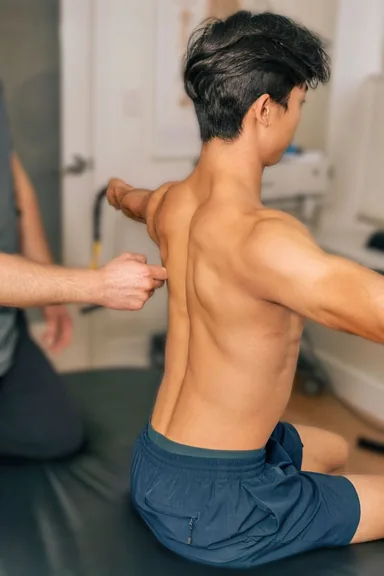
If you are dealing with frequent headaches or migraines, you know how much they can take out of a day. Whether it is a dull, constant ache or intense, throbbing pain, it can make it hard to focus, work, or even rest. For a lot of people, headaches end up as something they just put up with. They do not have to be.
What causes tension headaches and migraines?
Most chronic headaches fall into two patterns. Tension-type headaches present as a dull, band-like pressure around the head or behind the eyes, track with stress and posture, and are usually driven by tension in the neck and upper back. Migraines are more complex: throbbing or pulsing pain often on one side, sometimes with nausea, sensitivity to light or sound, or visual changes called aura.
Both can be triggered or worsened by joint stiffness in the upper neck, where the small joints irritate nearby nerves and affect blood flow patterns to the head. Previous neck injuries such as whiplash leave patterns that can take months to settle. The International Classification of Headache Disorders (ICHD-3) groups headaches that originate in or are aggravated by neck dysfunction under “cervicogenic headache”, and the evidence base for manual care in this group is the strongest.
What actually helps headaches and migraines?
The most effective plans target the neck mechanics first, then layer in the rest:
- Chiropractic care to restore movement in the upper cervical joints, which a 2019 Cochrane review found offers modest but consistent benefit for tension-type headache and cervicogenic headache
- Massage therapy and IMS to release the neck and upper-back muscles that pull on the joints
- Physiotherapy to strengthen the deep neck flexors and correct postural drivers
- Acupuncture to ease pain and stress-related tension, with NICE guidance recommending it as a preventive option in chronic tension-type headache and migraine
- Workstation and screen-height adjustments to remove the daily aggravator
For migraines specifically, the goal is reducing frequency and severity rather than abolishing every episode. Many patients find that addressing the neck reduces the number of “trigger days” their migraines need to fire.
How long until headaches improve?
For tension-type and cervicogenic headache, most patients notice less neck tension within two to three sessions and a reduction in headache frequency over four to six weeks. For migraine, reductions in frequency usually take eight to twelve weeks of consistent care to show. The goal is fewer episodes per month and shorter, less severe attacks when they do come, not a single overnight fix.
When should you see a professional for headaches?
If you are getting frequent headaches, relying on over-the-counter medication more than two to three days a week, or noticing neck pain and stiffness alongside the headaches, get assessed. Understanding what is contributing to your headache pattern is the first step in changing it. Sudden severe “thunderclap” headache, headache with fever and stiff neck, weakness or vision loss, or headache after a head injury needs urgent medical assessment, not chiropractic care.
Where to start in Vancouver
We can help you work out what is behind your headaches and whether chiropractic care is the right starting point for you. Life Integrative is on Dunbar Street in Vancouver, serving Kerrisdale, Point Grey, Kitsilano, and the rest of the West Side. Chiropractors, RMTs, physiotherapists, and acupuncturists work as a team here, so your plan can blend disciplines rather than rely on one. Care is led by Dr Daniel Zybutz, DC, the clinic director, with over twenty years of clinical experience.
Book online or call us on (604) 742-0702.
Related reading
- Posture Correction: Where to Start — the postural pattern that drives most tension headaches
- Spinal Decompression for Herniated Discs — when neck disc involvement contributes to head pain
Sources
- International Classification of Headache Disorders, 3rd edition (ICHD-3).
- Cochrane Library, Manual therapy for tension-type headache and Acupuncture for the prevention of episodic migraine reviews.
- HealthLink BC, headache and migraine topics, healthlinkbc.ca.
Transcript
Want to get rid of your tension headaches? I can tell you how we help. Typically, tension headaches start in the back, where the muscles cause strain in the upper neck because of poor posture. Think of your muscles as reins on a horse pulling. The harder they pull, the more they can irritate the joints. Those joints can affect the way blood flows to your brain. If we can release the pressure in the joint and help improve your posture, your headaches will get better.