If you have been feeling pain or tightness in your hip, especially when walking, sitting, or lying on one side, you are not alone. Hip pain is frustrating because it tends to affect almost every movement you make, from getting up from a chair to going for a walk. The tricky part: it is not always coming from where you think it is.
What causes hip pain?
Hip pain rarely comes from a single source. The most common drivers are tight muscles in the hips and glutes, weakness in the supporting muscles around the joint, joint stiffness in the hip itself, postural patterns that change how you load the leg, and referred pain from the lower back or sacroiliac joint. Sometimes the pain is in the hip joint directly; just as often, it is coming from surrounding areas that have stopped working properly.
The American Academy of Orthopaedic Surgeons clinical practice guideline on hip osteoarthritis lists pain with internal rotation, restricted range of motion, and pain in the groin (rather than the buttock) as the strongest pointers toward a true hip-joint cause. Buttock pain that radiates is more often a back or sacroiliac problem. That is why a proper assessment matters before any treatment starts.
What actually helps hip pain?
Most patients see the best results with a combination of care rather than a single fix:
- Physiotherapy to build strength, stability, and better movement patterns; the highest-evidenced first-line treatment for almost every category of hip pain
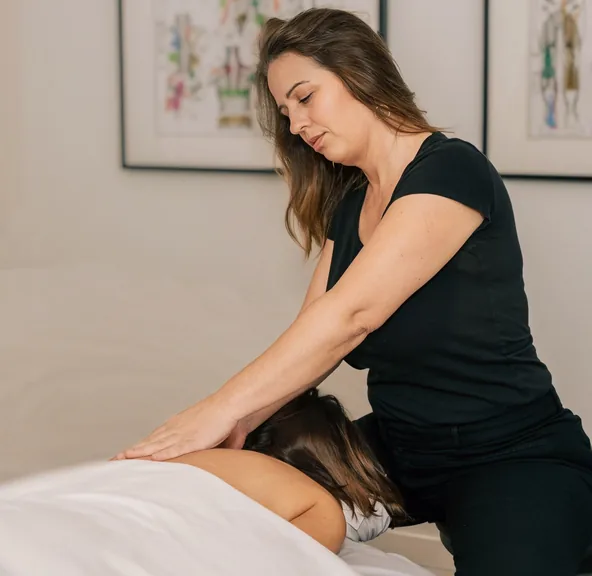
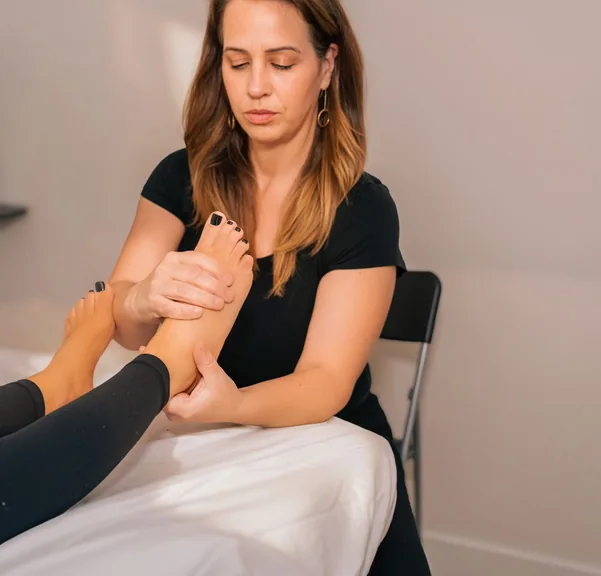
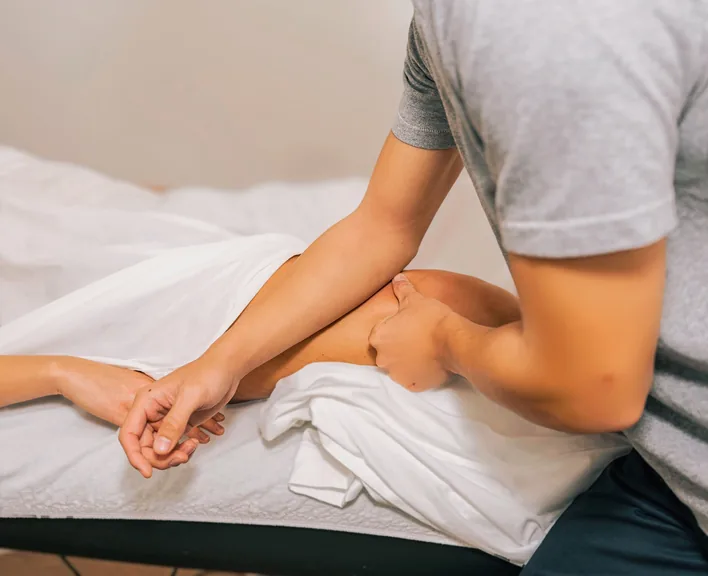
- Massage therapy to release tight muscles around the hips and lower back
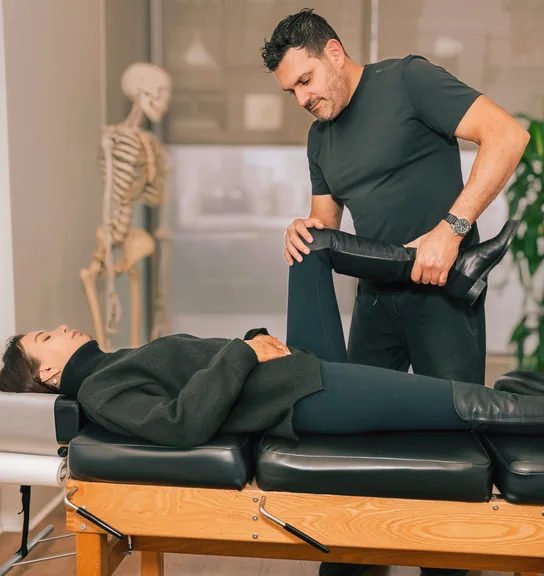
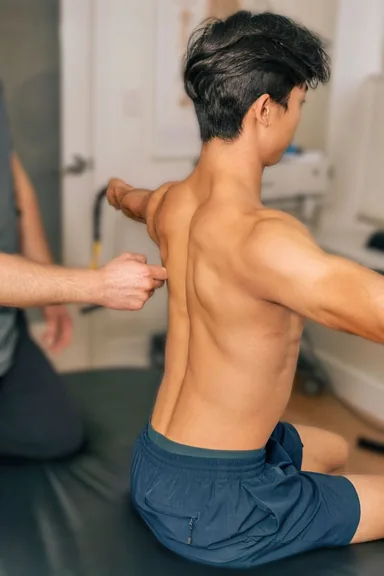
- Chiropractic care to improve joint mobility in the hip, pelvis, and lower spine
- Acupuncture to ease pain and muscle tension
Movement matters too, but it has to be the right kind. Too much rest tends to make the hip feel stiffer; the wrong movements can make it worse. Guided exercise and a gradual return to activity usually beat both.
How long until hip pain feels better?
It depends on the cause, but most patients notice less stiffness within two to three weeks, better movement within four to six sessions, and steady progress over six to eight weeks. Osteoarthritic hips usually need ongoing maintenance work rather than a discrete course of treatment. Muscle and tendon-driven hip pain tends to resolve faster than joint or referred pain. Consistency, including the home exercise side of the plan, makes the biggest difference.
When should you see a professional for hip pain?
If your hip pain is not improving after two to three weeks, is starting to affect how you walk or sit, or is spreading to your back or leg, get it assessed. The longer the underlying issue goes unaddressed, the more likely it is to start affecting your lower back or knees too. Urgent assessment is needed for sudden hip pain after a fall (especially over 60, when fracture risk rises), inability to bear weight, fever and hip pain together, or any visible deformity.
Where to start in Vancouver
We can help you work out what is actually behind your hip pain and put together a plan that fits your body and your daily life. Life Integrative is on Dunbar Street in Vancouver, serving Kerrisdale, Point Grey, Kitsilano, and Arbutus Ridge. Chiropractors, physiotherapists, RMTs, and acupuncturists work under one roof so your care is coordinated rather than fragmented. Care is led by Dr Daniel Zybutz, DC, the clinic director, with over twenty years of clinical experience.
Book online or call us on (604) 742-0702.
Related reading
- Joint Pain That Keeps Getting Worse: What’s Behind It — how compensation patterns spread an isolated problem
- Sciatica Relief in Vancouver — when hip pain is actually referred from the lower back
Sources
- American Academy of Orthopaedic Surgeons, Clinical Practice Guideline on the Management of Osteoarthritis of the Hip.
- British Journal of Sports Medicine consensus on greater trochanteric pain syndrome and gluteal tendinopathy.
- HealthLink BC, hip pain and osteoarthritis topics, healthlinkbc.ca.
Transcript
Does your hip hurt when you go upstairs or try to put your pants on? You might have hip impingement. We have a variety of orthopaedic tests we will do on you to determine what is causing your hip pain and what the best treatment is in terms of recovery.