If you have been feeling pain that starts in your lower back and shoots down your leg, or you are dealing with tingling, numbness, or tightness somewhere along that line, you are not alone. Sciatica can make simple things like sitting, driving, or sleeping properly really uncomfortable. The frustrating part: it does not always settle on its own.
What causes sciatica?
Sciatica is the name for pain that travels along the path of the sciatic nerve, usually from the lower back into the buttock and down the back of the leg. The reason it can be so confusing is that several different problems in the back can produce identical-looking symptoms. The most common drivers are lumbar disc irritation (where a bulged or herniated disc contacts a nerve root), tight muscles in the hips or glutes pressing on the nerve (the piriformis pattern), joint stiffness or restricted movement at the sacroiliac joint, and lingering inflammation after an injury such as a motor vehicle accident.
The 2020 NICE guideline on low back pain and sciatica frames most cases as self-limiting over weeks, but stresses that pinpointing the source guides which treatments help and which do not. A piriformis-driven sciatica responds to soft-tissue work that a disc-driven case would not.
What actually helps sciatica?
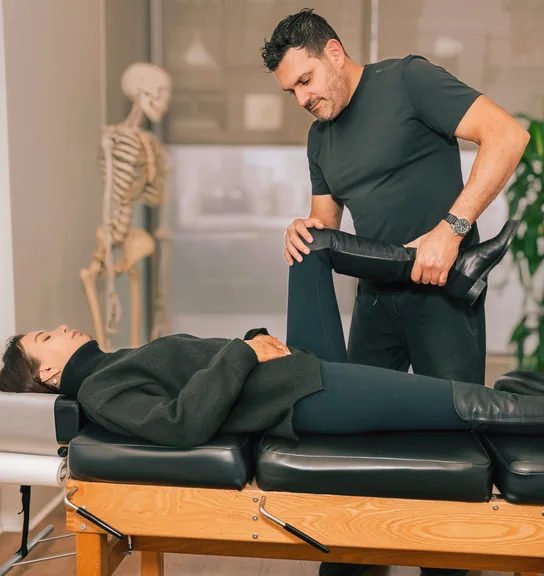
A good assessment leads to a tailored plan, which produces a much better outcome than a one-size-fits-all approach. The combination we use most often:
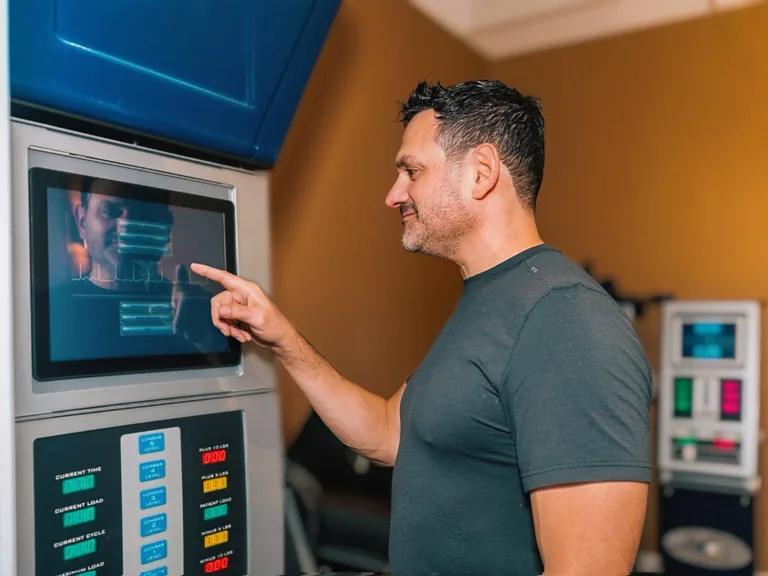
- Spinal decompression to gently reduce pressure on the irritated nerve, particularly effective for disc-driven sciatica
- Physiotherapy to improve movement, strengthen the supporting muscles, and reduce strain through the lumbar spine
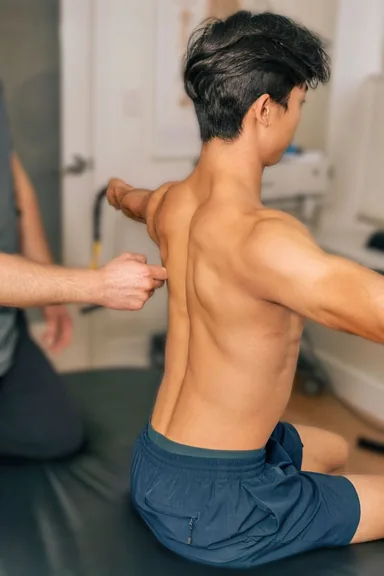
- Chiropractic care to improve joint mobility and address restrictions in the spine and sacroiliac joint
- IMS (intramuscular stimulation) to release tight muscles contributing to the pain, especially when the piriformis is involved
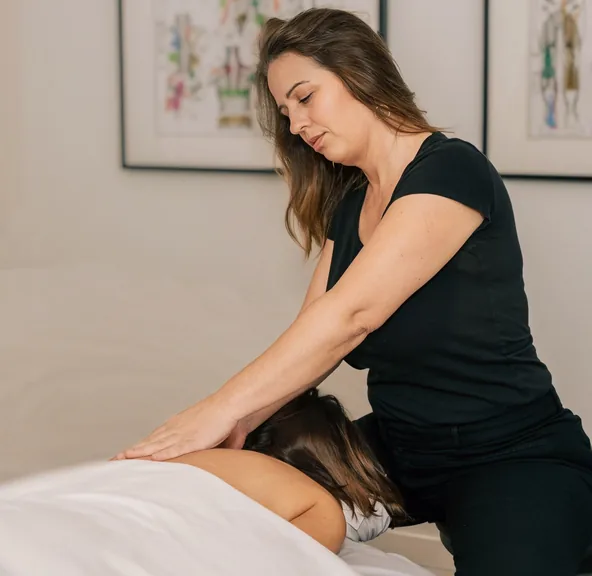
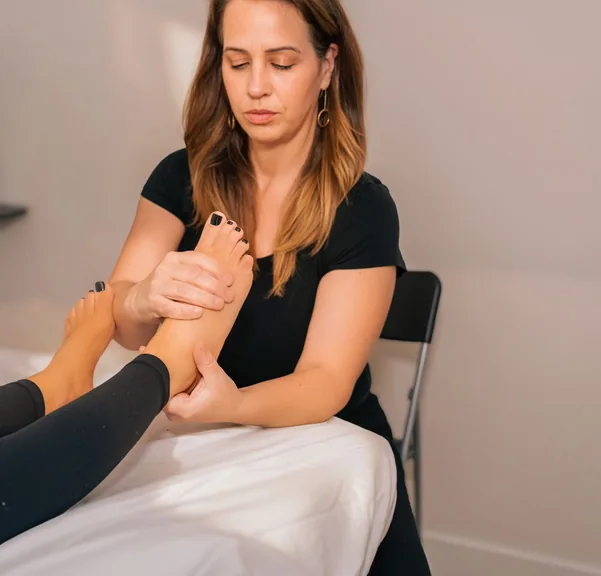
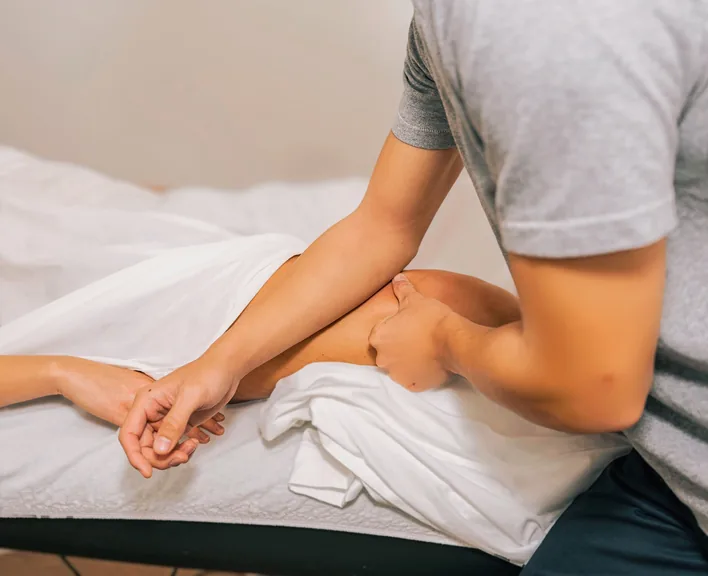
- Massage therapy to ease the muscles in the lower back, hips, and legs
- Acupuncture to calm nerve irritation and reduce pain
The goal is not just short-term relief, it is helping your body move better so the pain does not keep coming back.
How long until sciatica improves?
Most patients notice some pain relief within the first one to two weeks of consistent care, improved movement and less stiffness within three to four sessions, and gradual steady improvement over the following weeks. Typical recovery sits in the two-to-six-week range, with longer-standing cases or larger disc involvement taking longer. Roughly 80 to 90 percent of acute sciatica resolves with conservative care within twelve weeks, according to multiple cohort studies summarised in the NICE guideline.
When should you see a professional for sciatica?
If your pain is not improving after a week or two, is radiating down your leg, or is affecting your daily activities, get assessed. Sciatica can look similar from person to person, but the cause is not always the same, so the treatment should not be either. Urgent assessment is needed if you have loss of bladder or bowel control, saddle-area numbness, or progressive weakness in the leg, which can indicate cauda equina syndrome and is a medical emergency.
Where to start in Vancouver
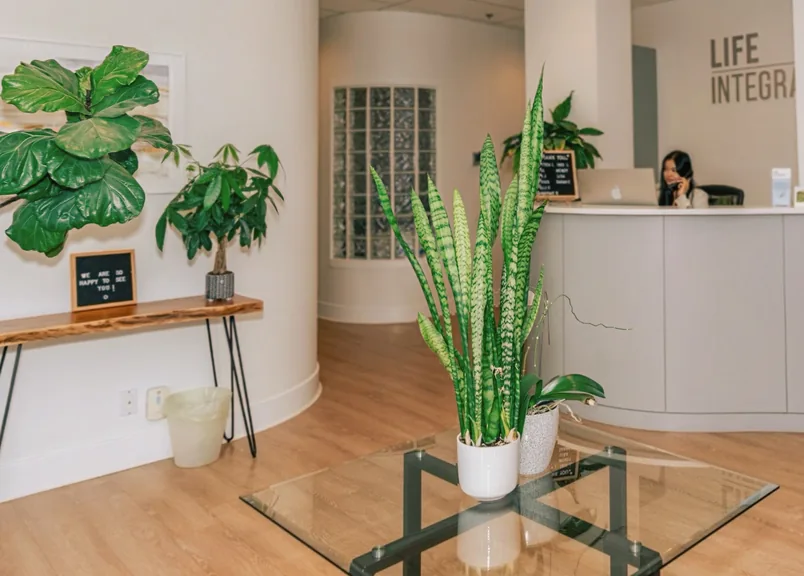
We can help you work out exactly what is causing your sciatica and put together a plan that fits your body and your lifestyle. Life Integrative is on Dunbar Street in Vancouver, serving Kerrisdale, Point Grey, Kitsilano, and the rest of the West Side. Chiropractors, physiotherapists, RMTs, acupuncturists, and spinal decompression are all under one roof. Care is led by Dr Daniel Zybutz, DC, the clinic director, with over twenty years of clinical experience.
Book online or call us on (604) 742-0702.
Related reading
- Spinal Decompression for Herniated Discs — the most common disc-driven cause of sciatica
- Spinal Stenosis Pain: A Practical Starting Point for Relief — when leg pain comes from narrowing of the spinal canal, not a disc
Sources
- NICE Guideline NG59, Low back pain and sciatica in over 16s: assessment and management.
- Cochrane Library, Surgical versus non-surgical treatment for lumbar disc herniation and related reviews.
- HealthLink BC, sciatica and back pain topics, healthlinkbc.ca.
Transcript
Do you think you have sciatica? Sciatica is a description for pain extending down your leg. We have various ways of testing what is causing it, because it can come from a variety of different sources in your back. Once we have determined what it is, that will dictate what kind of treatment we use. We offer spinal decompression, physiotherapy, IMS, acupuncture, and of course chiropractic. Treatment typically lasts anywhere from two to six weeks to resolve the issue.