If you have been feeling heaviness, numbness, or pain in your lower back or legs, especially when you have been standing or walking, you are not alone. Spinal stenosis can make it difficult to stay on your feet for long, and you might find that sitting or leaning forward brings relief. The tricky part: it usually develops gradually, so it can feel like it is slowly getting worse without an obvious trigger.
What causes spinal stenosis?
Lumbar spinal stenosis is a narrowing of the spaces inside the lower spine, which puts pressure on the nerves that travel down into the legs. The narrowing builds slowly from a combination of natural wear and tear, thickening of the ligaments inside the spinal canal, disc degeneration that reduces disc height, and bony changes around the joints. The hallmark symptom is “neurogenic claudication”: leg pain or heaviness that comes on after walking a short distance and eases when you sit or lean forward.
Even though the structural problem is in your spine, the symptoms are felt in your legs, which is why it is often confused with circulation problems or hip pain. The North American Spine Society guidelines list age over 50, leg symptoms that ease with sitting or forward bending, and reduced walking tolerance as the strongest clinical pointers toward stenosis.
What actually helps spinal stenosis?
The most effective plans keep you moving while reducing strain on the narrowed segment. A combination tends to give the best result:
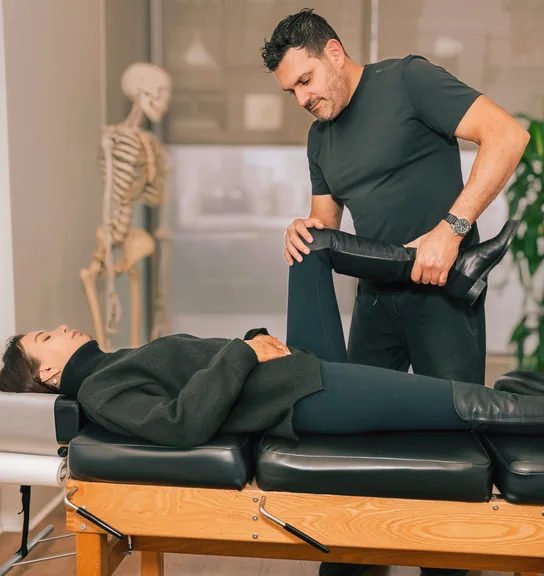
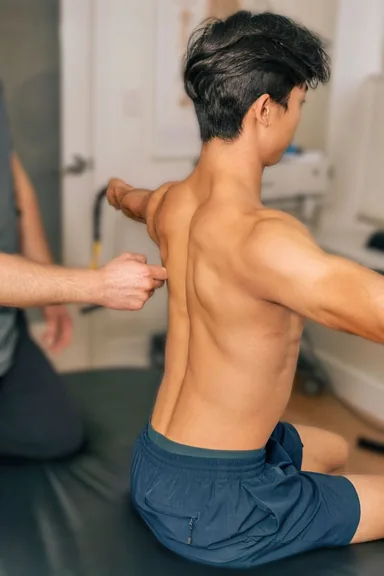
- Chiropractic care to improve mobility through the spine above and below the narrowed segment, reducing the joint stiffness that compounds nerve irritation
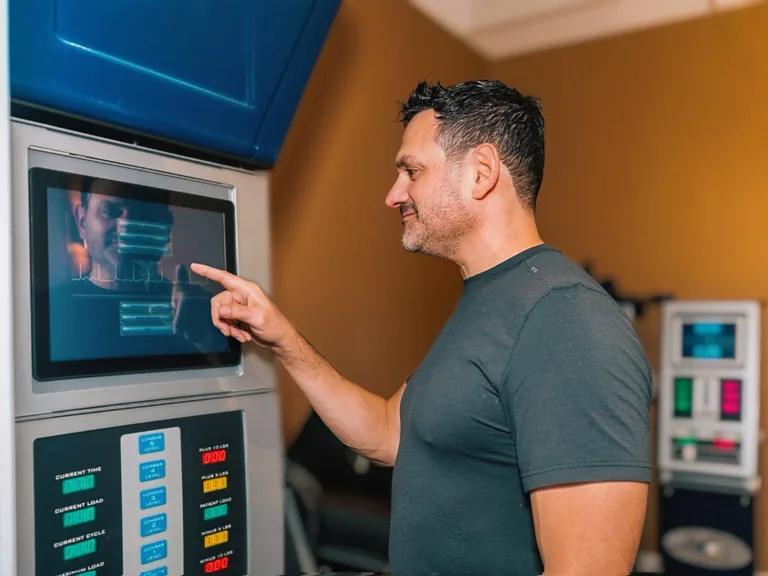
- Spinal decompression to gently create space and reduce pressure on the affected nerves
- Physiotherapy to strengthen the deep core and gluteal muscles that support the lower back, and progressively build walking tolerance
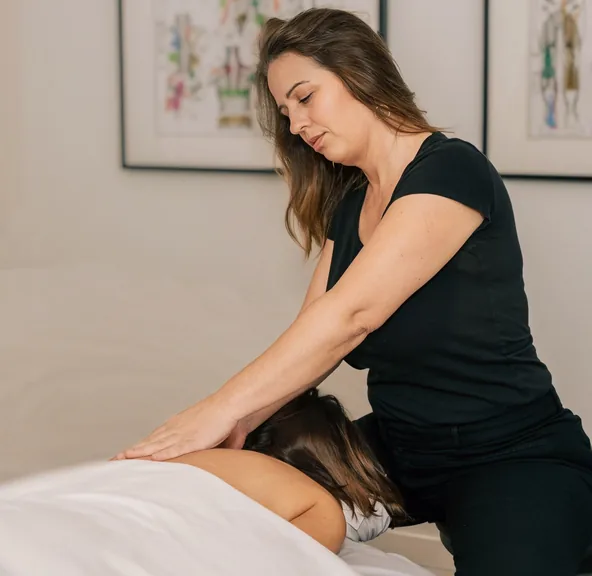
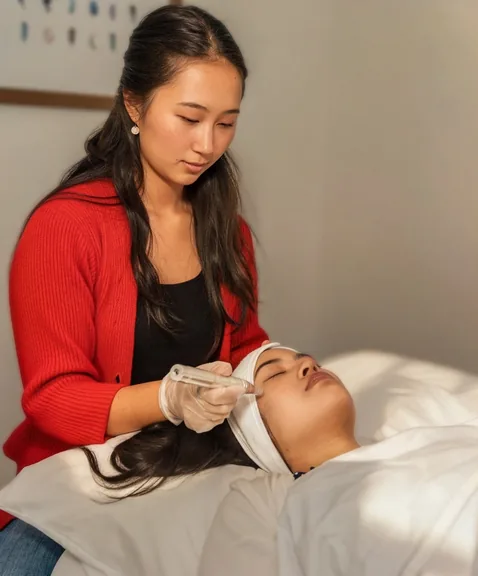
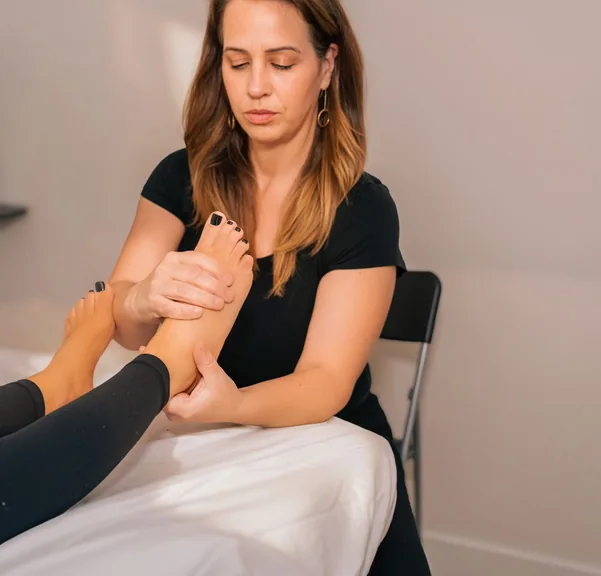
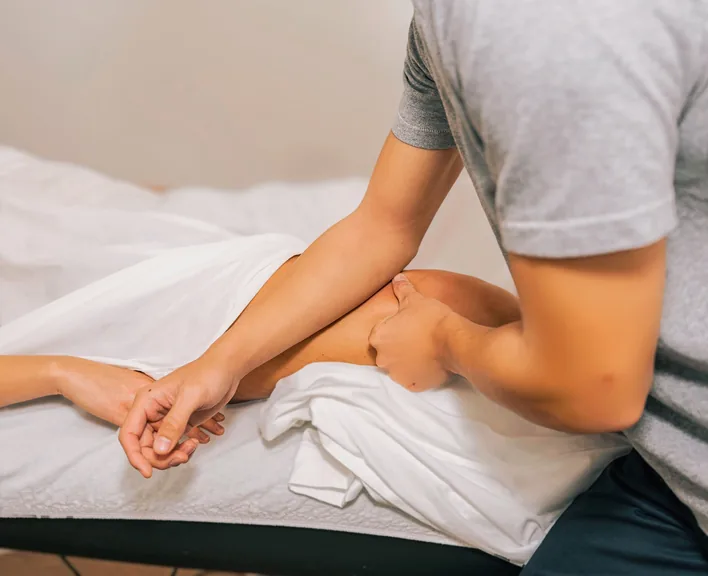
- Massage therapy to ease the surrounding muscle tension that protective guarding creates
- Acupuncture for additional pain relief
Movement is important, but it has to be guided. Too much rest makes stiffness worse and walking tolerance shrinks further; the wrong movements (heavy extension-based exercise, for example) can flare symptoms. The right kind of movement maintains mobility, builds the supporting muscles, and gradually extends how far you can walk before symptoms hit.
How long until spinal stenosis improves?
Spinal stenosis is a longer-term condition rather than something with a defined endpoint, but symptoms can improve substantially with the right plan. Most patients notice less stiffness within two to three weeks, improved tolerance for standing and walking within four to eight weeks, and meaningful gains in walking distance over three months. Maintenance care, rather than a fixed course, usually keeps people functioning well. Severe or progressing cases sometimes need a surgical consultation, but most people do not reach that point with consistent conservative care.
When should you see a professional for spinal stenosis?
If you are experiencing pain or heaviness in your legs when walking, relief when sitting or leaning forward, or ongoing lower-back discomfort, get assessed. The likelihood of spinal stenosis is much higher after 65, but it is by no means limited to that age group. Urgent assessment is needed for loss of bladder or bowel control, saddle-area numbness, or rapidly progressing weakness in either leg, which can indicate cauda equina syndrome and is a medical emergency.
Where to start in Vancouver
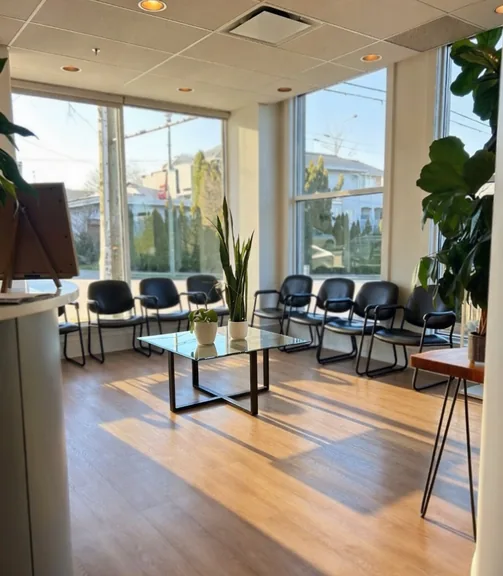
We can help you work out what is contributing to your symptoms and put together a plan that fits your body and your lifestyle. Life Integrative is on Dunbar Street in Vancouver, serving Kerrisdale, Point Grey, Kitsilano, and Arbutus Ridge. We use imaging and orthopaedic tests to confirm the diagnosis before recommending treatment. Spinal decompression is one of the most effective tools in our toolkit for stenosis-related pain. Care is led by Dr Daniel Zybutz, DC, the clinic director, with over twenty years of clinical experience.
Book online or call us on (604) 742-0702.
Related reading
- Spinal Decompression for Herniated Discs — when narrowing is driven by a disc rather than ligament thickening
- Sciatica Relief in Vancouver — overlapping leg-symptom pattern from a different cause
Sources
- North American Spine Society, Evidence-Based Clinical Guideline for the Diagnosis and Treatment of Degenerative Lumbar Spinal Stenosis.
- Journal of the American Medical Association, systematic reviews on non-surgical management of lumbar stenosis.
- HealthLink BC, spinal stenosis topic, healthlinkbc.ca.
Transcript
Did you wake up one morning and after walking one or two blocks your leg pain was so severe you had to sit down for relief? If you are over 65, the likelihood of you having a condition called spinal stenosis is quite high. Through a variety of imaging techniques and orthopaedic tests, we can determine if that is the case, and we offer an excellent treatment here called spinal decompression that will help you get back to walking.